
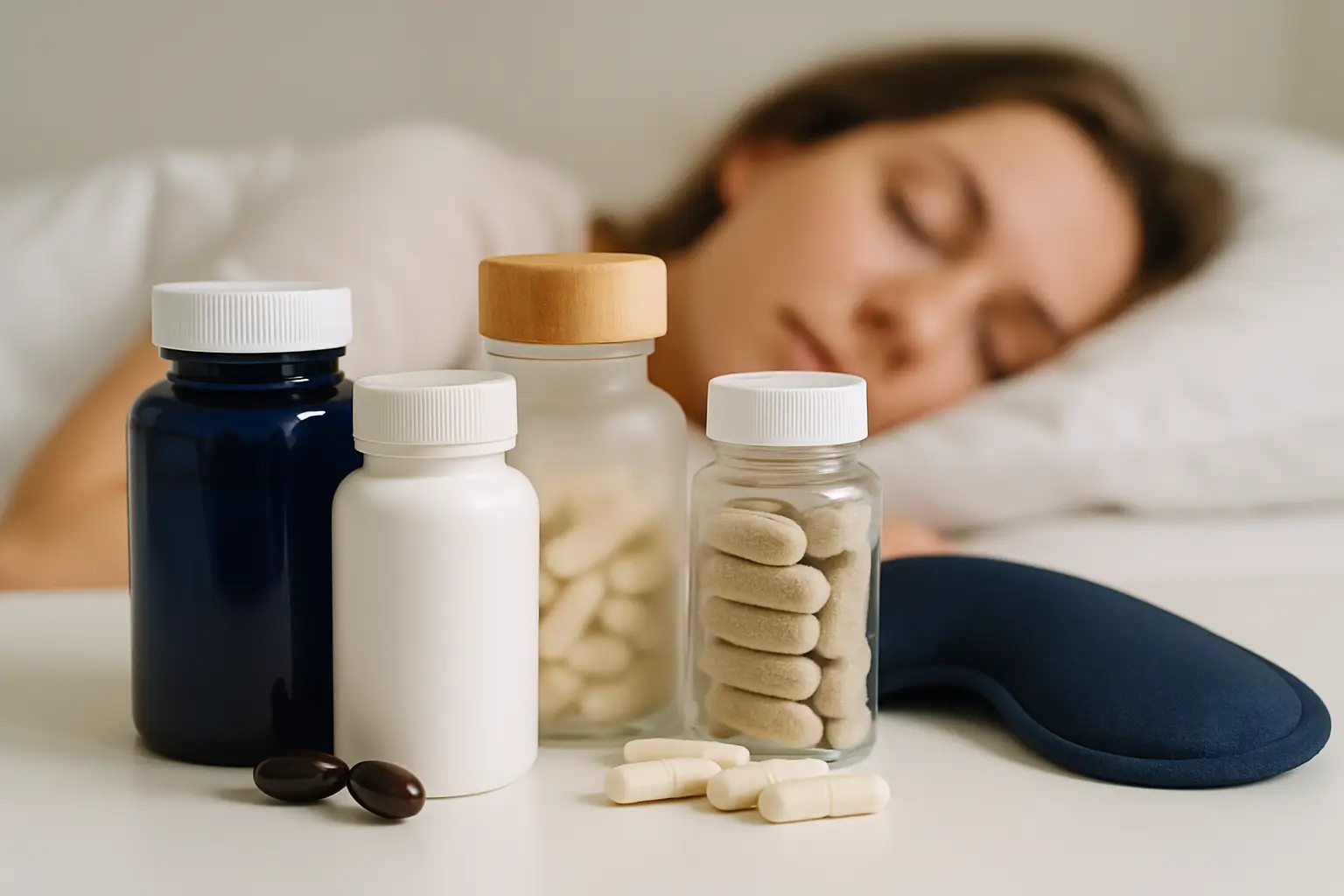
You know the moment: it’s 10:47 p.m., your phone is face-down like it’s in time-out, and your brain suddenly wants to replay every awkward conversation you’ve ever had. That’s when “just go to sleep” becomes a joke – and when a sleep supplement starts to feel less like a nice-to-have and more like a plan.
If you’re shopping for the best sleep supplements for adults, you’re not alone. Most people aren’t trying to become a perfect sleeper. They want a repeatable routine that helps them fall asleep faster, stay asleep longer, and wake up without that groggy, foggy “why do I feel worse?” feeling.
Below is a practical, product-led breakdown of the most common sleep supplement options adults buy right now, what each one is best for, and the trade-offs you should know before you add anything to your cart.
Best sleep supplements for adults: what to pick by your sleep problem
Not all “sleep” issues are the same, and the supplement that works for a 2 a.m. overthinker can be the wrong move for someone who keeps waking up at 3:30 a.m. The fastest way to shop smarter is to match the ingredient to the outcome.
If you struggle to fall asleep, you usually want something that nudges your body into sleep mode quickly. If you struggle to stay asleep, you’ll likely do better with calming support that lasts through the night. If you wake up groggy, the best choice is often a lower dose or a non-sedating option that supports relaxation without knocking you out.
1) Melatonin
Melatonin is the most recognizable sleep supplement for a reason – it can help shift your sleep timing, especially when your schedule is off (travel, late nights, or a “revenge bedtime” pattern).
The trade-off: more is not always better. Higher doses can increase next-day grogginess and vivid dreams for some people. Many adults do well starting low and only increasing if needed. If you’re consistently waking up at the same time every night, melatonin might not be the fix you’re hoping for.
2) Magnesium (glycinate is the fan favorite)
Magnesium is a go-to for adults who want calm, not a knockout. Magnesium glycinate is popular because it’s generally easier on the stomach than some other forms and is often used for relaxation support.
The trade-off: results are usually subtle, and it can take consistent use to notice a difference. Some forms (like citrate) can be more “digestive” than “sleepy,” which may be great for regularity but not ideal right before bed.
3) L-theanine
If your body is tired but your mind is loud, L-theanine is one of the most common picks. It’s often used to take the edge off mental chatter without feeling sedated.
The trade-off: it may not be strong enough on its own for people who need heavier sleep support, but it pairs well with other ingredients like magnesium or low-dose melatonin.
4) Glycine
Glycine doesn’t get as much hype, but it’s a steady option for adults who want better sleep quality and a smoother wind-down. It’s often described as helping the body “downshift.”
The trade-off: it’s not a dramatic, immediate effect for everyone. Think of it as a routine-builder rather than an emergency brake.
5) Valerian root
Valerian is a classic herbal sleep ingredient, often used for relaxation and occasional sleeplessness.
The trade-off: some people love it, some people hate it, and it has a distinct smell that can be a deal-breaker. It can also leave some users feeling sluggish the next morning, so it’s a “test night” ingredient, not something to try before an early meeting.
6) Passionflower
Passionflower is another herb commonly used for calm and stress support at night. It’s often chosen by people who feel wired from stress, not caffeine.
The trade-off: like many herbs, response varies. It can be a great gentle option, but it may not be strong enough if your main issue is frequent wake-ups.
7) Chamomile (capsules, teas, and blends)
Chamomile is the comfort blanket of sleep support. It’s widely used because it feels approachable, and it fits easily into a bedtime ritual.
The trade-off: it’s typically mild. If you’re dealing with serious sleep disruption, chamomile alone may not move the needle, but it can support a calming routine that makes other strategies work better.
8) Lemon balm
Lemon balm shows up in many “calm night” blends because it’s associated with relaxation and stress relief.
The trade-off: it’s not a hammer. It’s more of a soft landing. For adults who want something that won’t make them feel drugged, that’s exactly the point.
9) GABA
GABA is popular in sleep formulas because it’s linked to relaxation and quieting the nervous system.
The trade-off: not everyone experiences it the same way. Some people feel a noticeable calming effect, while others feel little. If you’re sensitive to supplements, start with a conservative dose and see how your body responds.
10) Ashwagandha
Ashwagandha is more “stress and cortisol support” than a direct sleep trigger, which is why many adults take it to improve sleep indirectly. If stress is the root of your restless nights, it can be a smart angle.
The trade-off: it’s not a quick fix for tonight’s insomnia. It’s more of a consistency ingredient, and some people prefer to take it earlier in the day rather than right before bed.
11) L-tryptophan or 5-HTP
These are often used for mood and sleep support since they relate to serotonin pathways.
The trade-off: these can be the wrong choice if you’re on certain medications or have specific health considerations. This is the category where it’s especially important to check compatibility, because “natural” still interacts.
12) Tart cherry
Tart cherry is a functional, food-based option that people use for recovery and sleep support. Some adults like it because it feels less like taking a “sleep pill” and more like adding a wellness habit.
The trade-off: it can be subtle, and products vary a lot in form (capsules, powders, concentrates) and strength.
How to shop sleep supplements without wasting money
A lot of sleep shopping fails for one boring reason: people buy a trendy formula without being clear on the outcome. Then they switch products every three nights and decide “nothing works.” If you want results and a better deal-per-night, you need a simpler approach.
Start by choosing your primary goal: falling asleep faster, staying asleep, or reducing next-day grogginess. Then decide whether you want a single-ingredient product (clean, easy to test) or a blend (convenient, often stronger, but harder to troubleshoot).
Blends can be great if you want a one-and-done capsule or gummy and you’re not interested in micromanaging your stack. Single ingredients are better if you’re sensitive, on a budget, or you want to know exactly what’s helping.
Timing matters more than most labels admit
Even a great supplement can feel like a flop if you take it at the wrong time. Fast-acting relaxation supports are usually taken 30 to 60 minutes before bed, while some stress-focused ingredients work better with daytime consistency.
Also, be honest about stimulants. If you’re taking a late-afternoon pre-workout, energy drink, or extra coffee “because it’s been a day,” don’t expect a gentle herbal capsule to overpower that. The best sleep supplement for adults is often the one that fits your real routine, not your ideal routine.
What “best” looks like: a simple decision filter
The best sleep supplements for adults are the ones you’ll actually use consistently, at a dose you tolerate, with an effect you can feel within a week or two. That’s it. No perfection required.
If you want a low-drama place to start, magnesium glycinate or L-theanine tends to be a safe, routine-friendly entry point for many adults. If your sleep schedule is off, low-dose melatonin may make more sense. If stress is the headline, consider an ashwagandha-forward approach and give it time.
If you prefer shopping by outcome with quick comparisons, deal callouts, and editor-style picks, you can browse sleep and relaxation options on FitVibesOnline without spending your whole night scrolling.
A few quick safety reality checks (because you want results, not regrets)
If you’re pregnant, nursing, managing a medical condition, or taking prescriptions, it’s worth checking with a qualified clinician before adding new sleep supplements. And even if you’re generally healthy, avoid stacking multiple sedating products on night one. Try one change at a time so you can tell what’s working.
Finally, if insomnia is frequent, intense, or tied to anxiety or depression, supplements can support your routine, but they shouldn’t be your only support.
Your goal tonight isn’t to find a miracle ingredient. It’s to find one small lever you can pull consistently so sleep starts feeling like something you do on purpose – not something you chase.