
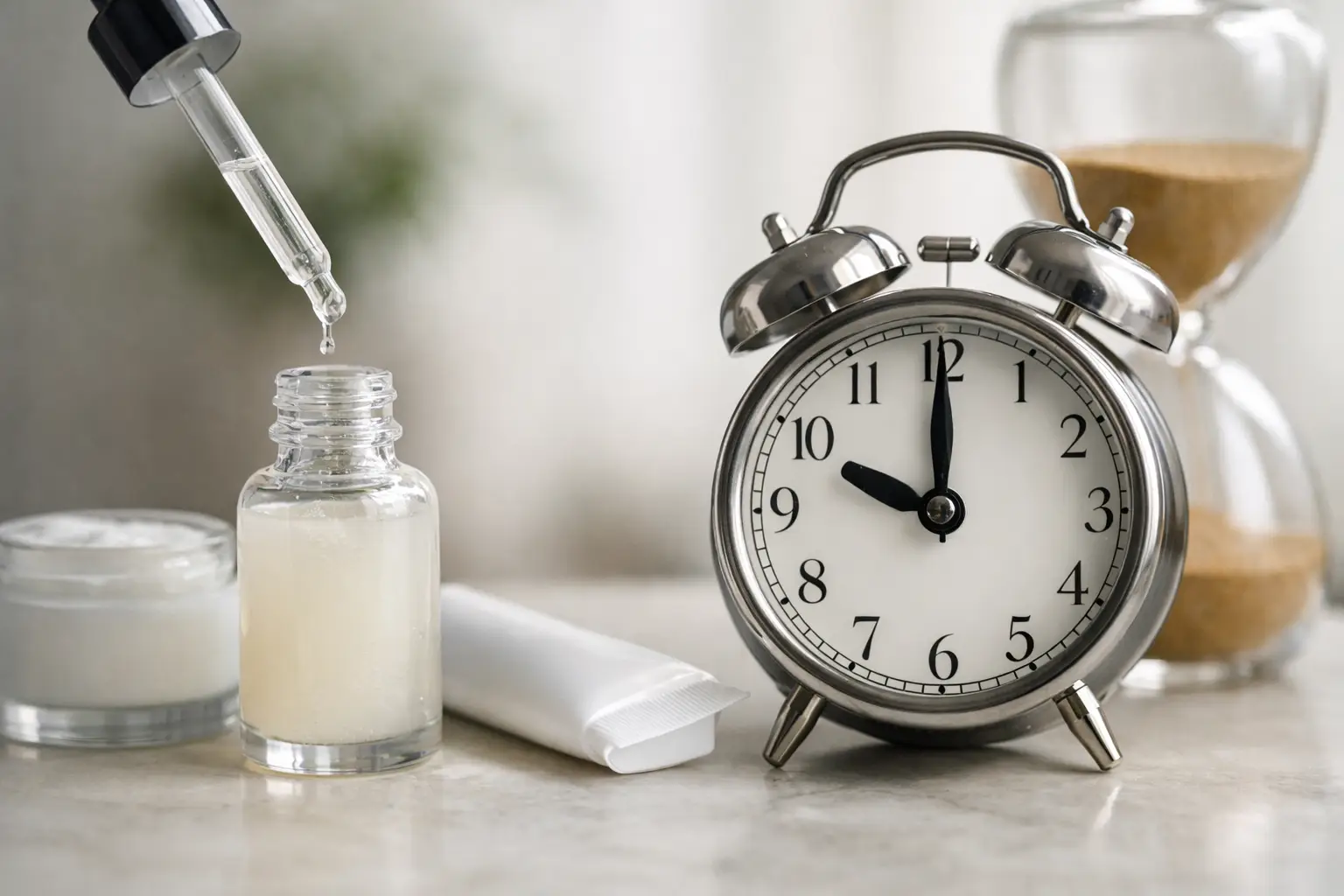
Retinol can feel like a scam for the first few weeks. You buy the serum, commit to the routine, and then stare at your skin wondering whether anything is happening at all. If you’ve been asking how long does retinol take to work, the short answer is this: most people start seeing early changes in 4 to 8 weeks, while more visible results usually show up around 8 to 12 weeks. Bigger improvements in texture, acne, and fine lines often take 3 to 6 months.
That timeline is real, but it is not the whole story. Retinol is one of those ingredients where consistency beats intensity. Use too much too fast, and you can end up irritated, flaky, and tempted to quit before the payoff shows up.
How long does retinol take to work for different skin goals?
Retinol does not improve everything on the same schedule. If your main goal is glow and smoother texture, you may notice small changes first. Skin can start looking a little fresher within a month, especially if dullness is your biggest issue.
If you’re using retinol for clogged pores or breakouts, the path can be less straightforward. Some people go through an adjustment phase that looks like more blemishes before things settle down. That can happen in the first 2 to 6 weeks. By the 8 to 12 week mark, many users start seeing fewer clogged pores and a smoother overall look.
Fine lines and dark spots usually ask for more patience. These are slower-moving concerns, and retinol works gradually by supporting skin turnover over time. It is common to need at least 12 weeks, and often closer to 6 months, before those changes become easier to spot in the mirror.
That’s why shopping by outcome matters. If you want a quick skin refresh before an event, retinol is probably not your best last-minute fix. If you want a smarter long-game product for clearer, smoother, more even-looking skin, it absolutely earns its spot.
Why retinol results take time
Retinol is not an overnight ingredient. It has to be converted by your skin into its active form before it can do its job, and that process takes time. Then your skin needs multiple renewal cycles to show visible change.
Think of it like a fitness routine. One workout will not transform your body, but repeated training sessions change how you look and feel over time. Retinol works the same way. The magic is in the repeat use, not the first application.
There is also a difference between skin feeling different and skin looking different. You might notice a smoother surface fairly early, but deeper concerns like uneven tone or fine lines need more time because they depend on longer-term changes in the skin.
What can make retinol work faster or slower?
Your timeline depends on more than the product name on the bottle. Strength matters, but so does your skin type, your routine, and whether you can actually stick with it.
A beginner-friendly retinol from brands like CeraVe, Olay, RoC, or The Ordinary may take a little longer than a stronger formula, but it can also be easier to tolerate. That matters because the best retinol is not the one with the highest percentage. It’s the one you can use consistently without wrecking your skin barrier.
Skin sensitivity changes the pace too. If your skin gets dry or reactive easily, you may need to start with retinol just two nights a week. That slower ramp-up can delay visible results, but it often leads to better long-term success because you are less likely to quit.
Your supporting routine also counts. Daily sunscreen is non-negotiable if you want retinol to deliver. Without it, you can end up undermining your progress with ongoing sun damage. A simple moisturizer helps too, especially during the adjustment period when dryness and flaking can show up.
And then there’s consistency. Skipping five nights, overdoing it for two, then taking a week off is not a results plan. A steady, realistic schedule wins every time.
The retinol adjustment phase is real
One reason people give up too early is that retinol does not always make skin look better right away. In the first few weeks, some users notice dryness, redness, peeling, or mild purging. That can make it seem like the product is not working when it is really just introducing your skin to a stronger turnover cycle.
This phase does not happen to everyone, and it should not be severe. If your skin is burning, painfully irritated, or staying inflamed, that is a sign to pull back. More product is not more effective if your barrier is compromised.
A smart move is to start low and slow. Apply a pea-sized amount at night, use it on dry skin, and follow with moisturizer. Some people do well with the sandwich method, which means moisturizer first, then retinol, then another layer of moisturizer. That can reduce irritation without forcing you to abandon the ingredient.
How long does retinol take to work if you’re using it the right way?
If you are using a well-formulated retinol consistently, wearing sunscreen, and not overdoing other active ingredients, here is a realistic timeline.
In weeks 1 to 4, you may notice little to no visible improvement. Some people see smoother skin, while others mostly notice dryness or sensitivity. This is the phase where patience gets tested.
In weeks 4 to 8, early improvements often start showing. Texture may look more refined. Skin can appear brighter. Some acne-prone users begin to see fewer clogged pores, though breakouts may still come and go.
In weeks 8 to 12, results are usually more noticeable. This is when many people start feeling like the routine is paying off. Skin may look clearer, more even, and softer.
At 3 to 6 months, retinol tends to show its strongest visible benefits. Fine lines can look softer, post-acne marks may fade more, and overall skin tone often looks more balanced.
That range is why retinol is best treated like a category staple, not a flash-sale miracle. It rewards commitment.
Common mistakes that delay retinol results
The biggest mistake is using too much too soon. That often leads to irritation, which forces you to stop, which slows your progress. The second mistake is expecting dramatic change in two weeks and quitting when it does not happen.
Another common issue is mixing retinol with too many other strong actives right away. If you are layering exfoliating acids, scrubs, and acne treatments on top, your skin may end up stressed instead of improved. A simpler routine usually works better when retinol is new to you.
Product mismatch can also be the problem. If a formula is too harsh for your skin, you may never use it consistently enough to get results. If it is too weak for your goals and you have already built tolerance, progress may feel slow. There is always a balance between potency and usability.
What to look for when shopping for a retinol product
If your goal is easier, more reliable results, focus on products that fit your real routine. Look for packaging that protects the formula, clear usage directions, and ingredients that support hydration. Ceramides, hyaluronic acid, glycerin, and niacinamide can make the experience smoother, especially for beginners.
If you are new to retinol, a lower-strength option from a trusted skin care brand is often the smarter buy. If you have used retinoids before and want stronger visible payoff, you may be ready for a more advanced formula. Price matters, but value matters more. A product you actually use three times a week is a better deal than a stronger one that sits in your cabinet.
If you like shopping by results, think about your top priority first. For breakouts, look for oil-free or acne-friendly formulas. For anti-aging, you may want a more nourishing cream or serum. For uneven tone, consistency and sunscreen are just as important as the retinol itself.
So, is retinol worth the wait?
For most people, yes. Retinol is not fast, but it is one of the more dependable over-the-counter ingredients for improving skin texture, supporting clearer pores, and softening early signs of aging. The trade-off is that it asks for patience and a little routine discipline.
If you want instant results, you may feel disappointed. If you want a product that can build visible improvement over time, retinol is still one of the smartest beauty buys in the game. And if you want to shop smarter without getting lost in endless options, curated skin care picks at FitVibesOnline can make narrowing down your next routine upgrade a lot easier.
Give retinol enough time to prove itself. Sometimes the best skin care results are not the fastest ones – they’re the ones that keep getting better when you stick with them.